As How to Frame Your Shots Using the Rule of Thirds takes center stage, this opening passage beckons readers into a world crafted with good knowledge, ensuring a reading experience that is both absorbing and distinctly original.
Photography is an art form that relies heavily on composition to create visually appealing and impactful images. Among the most fundamental and widely used principles is the Rule of Thirds, a guideline that helps photographers achieve balance, interest, and dynamism in their shots. This approach involves mentally dividing your frame into nine equal sections using two horizontal and two vertical lines, then strategically placing key elements along these lines or at their intersections.
Introduction to the Rule of Thirds
![Rule of Thirds in Photography [4 Tips for Mastery]](https://tipsandtrik.web.id/wp-content/uploads/2025/09/6f92384f5aecd8af53bfac49583f4858.png "Rule of Thirds in Photography [4 Tips for Mastery]")
The Rule of Thirds is a fundamental principle in visual composition that guides photographers and artists in creating more engaging and aesthetically pleasing images. It’s a guideline designed to help you intentionally place your subjects and key elements within the frame, leading to a more dynamic and balanced composition.This compositional guideline, while often referred to as a “rule,” is more accurately a suggestion or a starting point.
Its purpose is to move away from placing the main subject directly in the center of the frame, which can sometimes lead to static or predictable images. By understanding and applying the Rule of Thirds, you can unlock a more sophisticated and captivating way of seeing and framing your shots.
The Basic Grid Structure
The core of the Rule of Thirds lies in dividing your frame into nine equal sections using two horizontal lines and two vertical lines, creating a tic-tac-toe-like grid. These lines intersect at four key points, known as “power points” or “points of interest.”The underlying concept is that placing important compositional elements along these lines or at their intersections tends to create more visual interest and tension than centering them.
Understanding the Visual Impact
Imagine a perfectly centered subject. While it can convey symmetry and directness, it often lacks dynamism. Now, consider moving that same subject slightly off-center, aligning it with one of the vertical lines or placing it at an intersection. This subtle shift can instantly make the image feel more balanced, engaging, and natural.
“The Rule of Thirds is a guideline, not a strict law. It’s a tool to help you create more compelling compositions by encouraging you to place key elements in visually pleasing positions.”
This principle is particularly effective when you want to guide the viewer’s eye through the image. By placing a subject off-center, you create negative space that the viewer’s eye can travel through, leading them to the point of interest. This is akin to telling a story within your photograph, where the viewer follows a path to discover the main subject.
Identifying Key Elements for Placement
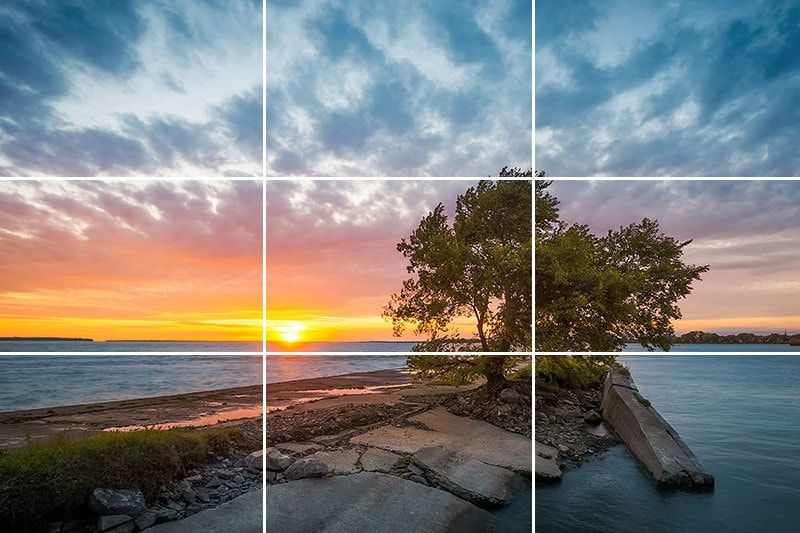
Once you have a grasp of the Rule of Thirds grid, the next crucial step is to learn how to identify and strategically place the most important elements within your frame. This involves a keen observation of your scene and understanding what draws the viewer’s eye. By consciously choosing where to position your subject and supporting elements, you can significantly enhance the impact and storytelling of your photographs.Effectively using the Rule of Thirds requires you to look beyond just the main subject.
A well-composed image often contains multiple points of interest that, when arranged thoughtfully, guide the viewer’s gaze and create a more dynamic and engaging composition. This section will guide you through recognizing these elements and leveraging them within the grid.
Primary Subject Placement
The most fundamental application of the Rule of Thirds involves positioning your main subject. Instead of centering it, consider placing it along one of the vertical or horizontal lines, or at one of the four intersection points. These points are inherently stronger because they create visual tension and guide the viewer’s eye into the frame. For instance, a portrait where the subject’s eyes are placed on an upper intersection point often feels more engaging than a perfectly centered portrait.
Secondary Points of Interest
Beyond the primary subject, a scene often contains elements that add depth, context, or visual appeal. Recognizing these secondary points of interest and their relationship to the primary subject, as dictated by the Rule of Thirds, is key to creating a balanced and compelling image. These could be elements in the background that complement the subject, or other objects in the foreground that lead the viewer into the scene.A photograph of a lone tree in a field, for example, might have the tree as the primary subject placed on a vertical third line.
The texture of the grass in the foreground or the shape of a distant cloud could serve as secondary points of interest. By placing these secondary elements in relation to the grid and the primary subject, you can create a sense of depth and visual harmony.
Leading Lines in Composition
Leading lines are powerful compositional tools that naturally draw the viewer’s eye through the image. When combined with the Rule of Thirds, they become even more effective. A leading line can originate from one of the lower intersection points and lead towards the primary subject, which might be placed on an opposing intersection point or along a third line. This creates a clear path for the viewer’s gaze, directing them to the most important part of the photograph.Consider a landscape photograph featuring a winding path.
If the path starts near the bottom left corner (outside the grid, but initiating the line) and leads towards a focal point, such as a mountain peak or a building, placed on the upper right intersection, the viewer’s eye will be guided along the path to the main subject. This creates a strong sense of depth and directs attention effectively.
Balancing Visual Weight
Visual weight refers to how much an element attracts the viewer’s eye. The Rule of Thirds helps in distributing this weight within the frame to create a balanced and pleasing composition. Placing a strong, dark, or large element on one side of the frame can be balanced by a smaller, lighter, or less dominant element on the opposite side, often positioned on a contrasting third line or intersection.For example, if you have a large, dark building on the left side of your frame, placed along the left vertical third line, you might balance it with a bright patch of sky or a smaller, lighter object like a distant boat on the right side of the frame, perhaps near the right vertical third line.
This distribution prevents the image from feeling lopsided and creates a more stable and harmonious visual experience.
Practical Application in Photography
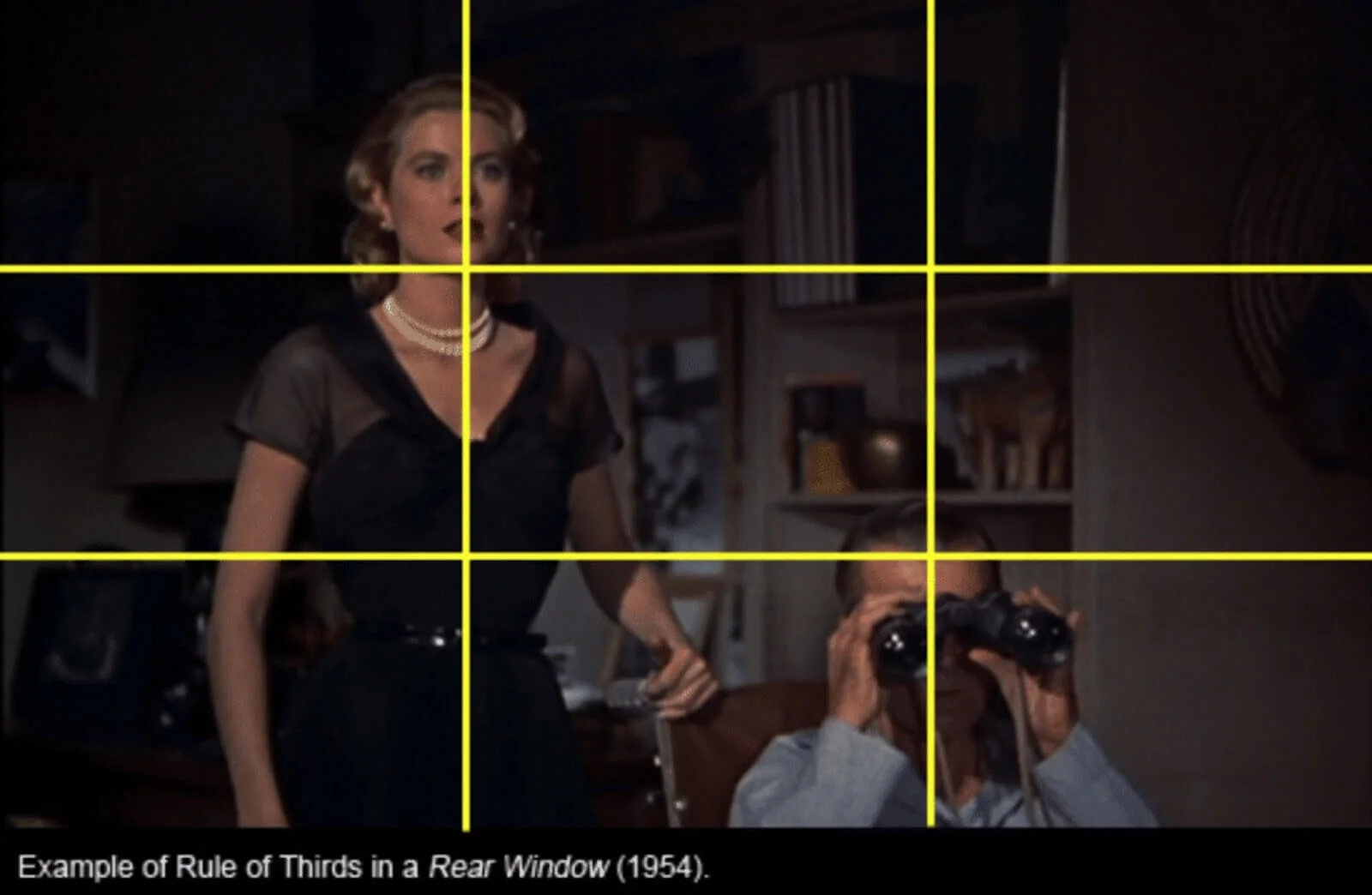
The Rule of Thirds is a compositional guideline that helps create more balanced, dynamic, and visually appealing photographs. While it’s a simple concept, its effective application in real-time shooting scenarios requires a systematic approach. This section will guide you through the practical steps of using the Rule of Thirds, explore its relevance across different photography genres, and offer techniques for visualizing the grid and even intentionally deviating from it.
Step-by-Step Application in Real-Time Shooting
Applying the Rule of Thirds during a live shooting situation involves a series of conscious decisions from framing the scene to capturing the image. Here’s a procedural breakdown:
- Visualize the Grid: Before or as you look through your viewfinder or at your camera’s screen, mentally superimpose a 3×3 grid over the scene. This grid divides your frame into nine equal sections by two horizontal and two vertical lines.
- Identify Key Elements: Determine the most important subjects or elements within your scene that you want to emphasize. These could be a person’s eyes, a prominent natural feature, or a specific object.
- Place Subjects on Intersections or Lines: Aim to position your key elements along the grid lines or, even more powerfully, at the points where the lines intersect. These intersection points are often referred to as “power points” and naturally draw the viewer’s eye.
- Consider Horizon Placement: If your scene includes a horizon (like in landscapes), place it along either the top or bottom horizontal line. Placing it on the bottom line emphasizes the sky, while placing it on the top line emphasizes the foreground. Avoid centering the horizon, as this can often make a photograph feel static.
- Balance Elements: If you have a dominant subject on one side of the frame, consider placing a secondary, less dominant element on the opposite side to create visual balance. This could be a subtle detail or a contrasting shape.
- Refine Composition: Move your camera slightly or adjust your focal length to fine-tune the placement of your subject within the grid. Small adjustments can significantly impact the final composition.
- Capture the Shot: Once you are satisfied with the placement of your elements according to the Rule of Thirds, take the photograph.
Photographic Genres Benefiting from the Rule of Thirds
The Rule of Thirds is a versatile guideline that proves effective across a wide spectrum of photographic genres. Its ability to create balance and guide the viewer’s eye makes it a fundamental tool for many photographers.
- Landscape Photography: Essential for positioning horizons, prominent natural features like mountains or trees, and foreground elements to create depth and interest.
- Portrait Photography: Particularly useful for placing the subject’s eyes on an intersection point, which is a natural focal point for the viewer. It also helps in balancing the portrait within the frame.
- Wildlife Photography: Effective for placing the animal’s gaze on an intersection, giving the animal “room to look into” the frame, which often creates a more engaging image.
- Street Photography: Helps in composing scenes with multiple elements, placing human subjects or points of interest on grid lines or intersections to guide the narrative of the photograph.
- Architectural Photography: Useful for aligning strong vertical or horizontal lines of buildings with the grid lines, creating a sense of order and visual appeal.
- Still Life Photography: Aids in arranging objects within the frame to create a pleasing and balanced composition, drawing attention to the main subject.
Visualizing the Grid Without On-Camera Overlays
While many modern cameras offer on-screen grid overlays, developing the ability to visualize the Rule of Thirds grid mentally is a crucial skill for any photographer. This allows for quicker composition and greater flexibility.
- Practice with the Overlay: Initially, use your camera’s grid overlay extensively. This will help you internalize the proportions and where the lines and intersections fall.
- Mental Rehearsal: Before even picking up your camera, try to mentally divide scenes around you into thirds. This trains your brain to see the compositional potential.
- Use Common Objects as Guides: Imagine a tic-tac-toe board superimposed on your scene. Think of the center of objects or key features and how they align with these imaginary lines.
- Focus on Edge-to-Edge Proportions: Understand that the lines are essentially one-third of the way in from each edge of the frame. The intersections are where these imaginary lines cross.
- Squinting Technique: Squinting can help simplify the scene and highlight the main subjects, making it easier to mentally place them within the Rule of Thirds framework.
- Post-Processing Practice: When reviewing your photos, mentally draw the grid on them. This reinforces the concept and helps you analyze your compositions.
Breaking the Rule of Thirds for Artistic Effect
While the Rule of Thirds is a powerful guideline, intentionally deviating from it can lead to unique and impactful artistic expressions. Understanding when and why to break the rule is as important as knowing how to apply it.
Symmetrical Compositions
When a scene possesses inherent symmetry, adhering to the Rule of Thirds might detract from its natural balance. Centering the subject or the symmetrical element can enhance the feeling of order, harmony, and perfection. For instance, a perfectly reflected landscape in still water or a grand, symmetrical building facade often benefits from a central placement.
“Symmetry is often a deliberate choice to convey order, stability, and perfection, and can be more impactful when centered.”
Creating Tension and Dynamism
Placing a subject directly in the center of the frame, especially in portraiture or with a strong single subject, can create a powerful and direct connection with the viewer. This can convey confidence, assertiveness, or a sense of confrontation. Alternatively, placing subjects very close to the edge of the frame can create a feeling of unease, anticipation, or that something is about to enter or leave the scene.
This technique can inject significant tension and dynamism into an otherwise static composition.
Emphasizing Negative Space
Sometimes, the absence of elements, or negative space, is as important as the presence of subjects. Deliberately placing a small subject in a vast expanse of negative space, far from any grid lines or intersections, can emphasize isolation, solitude, or the sheer scale of the environment. This approach uses the Rule of Thirds as a point of contrast to highlight the impact of emptiness.
Leading Lines and Patterns
While the Rule of Thirds can be used to position elements within leading lines or patterns, sometimes the lines or patterns themselves become the dominant compositional element. Following the flow of a winding road or a series of repeating shapes might necessitate placing the primary subject off-center or even in a less conventional position to best showcase the power of the line or pattern.
The rule is a suggestion, not a mandate, and the strength of other compositional devices can override it.
Using the Rule of Thirds in Different Scenarios
The Rule of Thirds is a versatile compositional guideline that can be adapted to a wide range of photographic situations. By understanding how to apply its principles to various genres, photographers can elevate their images from simple snapshots to compelling visual narratives. This section explores how the Rule of Thirds enhances compositions in landscape, portraiture, and action photography, and contrasts its effectiveness in symmetrical versus asymmetrical arrangements.
Landscape Photography and Horizon Placement
In landscape photography, the placement of the horizon is a critical element that significantly impacts the mood and balance of an image. The Rule of Thirds provides a straightforward method for achieving aesthetically pleasing compositions by avoiding a centered horizon.Applying the Rule of Thirds to landscapes involves dividing the frame into thirds both horizontally and vertically. The key is to place the horizon line along either the top or bottom horizontal grid line.
- Placing the horizon on the bottom third: This technique emphasizes the sky, making it the dominant element in the photograph. It is particularly effective when the sky is dramatic, with interesting clouds, colors, or a compelling light. This approach can convey a sense of vastness, openness, or grandeur.
- Placing the horizon on the top third: Conversely, positioning the horizon on the top third draws attention to the foreground and middle ground. This is ideal when there are significant details, textures, or points of interest in the lower portion of the scene, such as intricate patterns in sand, a winding river, or striking rock formations. This can create a feeling of groundedness or draw the viewer into the details of the landscape.
By consciously deciding where to place the horizon based on the scene’s elements, photographers can guide the viewer’s eye and communicate a specific feeling or message.
Portraiture and Eye Placement
For portrait photography, the Rule of Thirds is invaluable for creating engaging and natural-looking images by focusing on the subject’s eyes. The eyes are often the most important feature in a portrait, as they convey emotion and connect with the viewer.When composing a portrait using the Rule of Thirds, the goal is to position the subject’s eyes on or near one of the upper intersection points of the grid.
- Subject looking into the frame: If the subject is looking towards the center of the frame, their eyes should ideally be placed on the intersection point that creates “looking room” or “leading space” in the direction of their gaze. This gives the viewer a sense of where the subject is directing their attention and avoids making the subject feel confined.
- Subject looking out of the frame: When a subject is looking away from the camera, their eyes should be positioned on the intersection point that allows for ample space in the direction of their gaze. This creates a sense of openness and can evoke feelings of contemplation or longing.
Placing the eyes off-center, on one of the vertical lines or at an intersection, adds dynamism and visual interest, making the portrait more captivating than if the eyes were directly in the center.
Action Shots and Movement Direction
Capturing dynamic action shots benefits greatly from the Rule of Thirds by thoughtfully considering the direction of movement. This compositional technique helps to convey a sense of speed, anticipation, and flow.When photographing subjects in motion, the Rule of Thirds guides the placement of the subject relative to the direction of their movement.
- Leading Space: A key principle is to provide “leading space” or “looking room” in front of the moving subject. If a runner is moving from left to right across the frame, they should be placed on the left vertical third, with the majority of the frame to their right. This allows the viewer’s eye to follow the subject’s path and anticipate what is happening or what will happen next.
- Avoiding Crowding: Conversely, placing a moving subject at the edge of the frame with no space in front of them can make the image feel cramped and the action feel stifled. The viewer’s eye may hit a dead end, interrupting the sense of motion.
By anticipating the subject’s movement and using the Rule of Thirds to give them space to move into, photographers can create images that feel more energetic and tell a more complete story of the action.
Symmetrical Versus Asymmetrical Compositions
The Rule of Thirds is particularly effective in enhancing asymmetrical compositions, but its application can also be considered even in symmetrical scenes. The fundamental difference lies in how the grid guides the viewer’s eye away from a static center.When dealing with symmetrical compositions, the Rule of Thirds can be used to break the inherent balance and introduce visual interest.
- Symmetrical Compositions: A perfectly centered, symmetrical subject can sometimes feel static or predictable. While the Rule of Thirds might not be the primary tool for enforcing symmetry, one can still apply it to slightly offset elements within the symmetrical frame to add a subtle dynamic. For example, if photographing a perfectly balanced building, placing a small, asymmetrical element like a person or a tree on one of the third lines can create a focal point and guide the viewer’s eye.
- Asymmetrical Compositions: The Rule of Thirds shines brightest in asymmetrical compositions. By placing key elements on or near the intersection points, the photographer creates an imbalance that the viewer’s eye naturally seeks to resolve. This leads to a more engaging and dynamic viewing experience. For instance, a single tree in a field, a boat on a vast ocean, or a person walking down a street are all prime candidates for the Rule of Thirds, where placing the subject off-center creates a more compelling visual flow.
In essence, while symmetry can be visually pleasing, the Rule of Thirds is most powerful when it introduces tension and directs the viewer’s gaze within compositions that are not inherently balanced. It helps to avoid the common pitfall of simply centering everything, leading to more thoughtful and impactful photographs.
Visualizing the Grid and Subject Placement
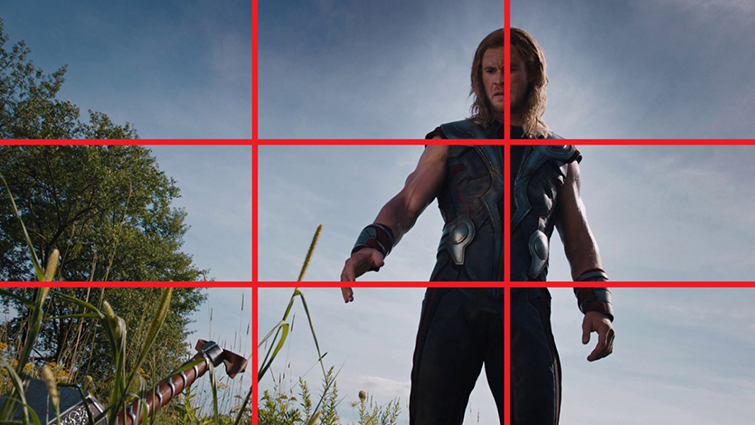
Understanding how to mentally overlay the rule of thirds grid is a fundamental skill that transforms ordinary snapshots into compelling compositions. This technique allows you to consciously guide the viewer’s eye through your image, emphasizing key elements and creating a sense of balance and visual interest. It’s a practice that becomes more intuitive with experience, but starting with a clear understanding of the visualization process is crucial.The core of the rule of thirds lies in its simple yet powerful grid structure.
By imagining this grid, you gain a framework for strategically placing your subjects and important visual components, leading to more dynamic and aesthetically pleasing photographs. This section will guide you through the process of internalizing this grid and applying it effectively to your shots.
Mentally Superimposing the Grid
The ability to visualize the 3×3 grid without external aids is a key step in mastering the rule of thirds. This mental overlay allows for quick adjustments and intuitive composition, especially in fast-paced shooting situations.To begin visualizing the grid, imagine your camera’s viewfinder or the live view screen on your digital camera divided into nine equal rectangles by two horizontal lines and two vertical lines.
These lines intersect at four points, creating a tic-tac-toe-like pattern. The key is to practice this visualization consistently. Many cameras and smartphone apps offer an option to display this grid overlay directly on the screen or in the viewfinder, which can be an excellent tool for training your eye. Regularly turning this feature on and off will help you internalize the grid’s proportions and intersection points.
Identifying Intersection Points
The four points where the grid lines intersect are considered prime locations for placing significant elements of your photograph. These points are visually strong and naturally draw the viewer’s attention.When you mentally superimpose the grid, pay close attention to these four intersection points. Think of them as magnets for your subject or key details. For instance, if you are photographing a person, placing their eyes on one of these intersection points, particularly the upper ones, can create a much more engaging portrait than centering their face.
The viewer’s gaze will be immediately drawn to the eyes, establishing a connection with the subject.
Impact of Subject Eye Placement on Upper Intersections
Placing a subject’s eyes on one of the upper intersection points significantly enhances the emotional impact and engagement of a portrait. This strategic placement leverages the natural tendency of the human eye to seek out other eyes.When a subject’s gaze aligns with an upper intersection point, it creates a sense of directness and connection with the viewer. The eyes become the focal point, and the surrounding composition supports and frames them.
This technique is particularly effective for conveying emotion, personality, and a sense of presence. It avoids the static feel of a centrally placed subject and adds a dynamic element that draws the viewer deeper into the image.
Positioning Dominant Objects on Grid Lines
Beyond the intersection points, the grid lines themselves offer powerful compositional guides for placing dominant objects. Aligning key elements with these lines can create a sense of order, direction, and visual flow.Consider placing a prominent object, such as a tree, a building, or a horizon line, along one of the vertical or horizontal grid lines. For example, if you are photographing a landscape, aligning the horizon with the lower horizontal line can give more emphasis to the sky, while placing it on the upper line can highlight the foreground.
Similarly, a strong vertical element like a solitary tree can be placed on one of the vertical lines to create a sense of height and stability within the frame. This deliberate placement helps to structure the image and guide the viewer’s eye through the scene in a controlled and aesthetically pleasing manner.
Benefits and Impact of Using the Rule of Thirds
Embracing the Rule of Thirds is more than just a compositional guideline; it’s a powerful tool that significantly elevates the aesthetic and emotional impact of your photographs. By strategically placing key elements, you transform a static scene into a visually compelling narrative that resonates with viewers. This section delves into the tangible advantages and profound psychological effects that arise from consistently applying this fundamental principle.The Rule of Thirds fundamentally shifts the viewer’s eye, guiding them through the image in a more natural and engaging manner.
Instead of confronting a subject directly in the center, which can feel predictable and static, off-center placement creates a sense of movement and anticipation. This deliberate deviation from symmetry invites exploration and encourages a deeper connection with the photograph, fostering a more dynamic and memorable viewing experience.
Enhanced Image Dynamism and Engagement
Applying the Rule of Thirds injects a sense of energy and interest into your compositions. When subjects or points of interest are placed along the intersecting lines or at the points where these lines meet, the image feels more alive and less predictable. This deliberate asymmetry naturally draws the viewer’s eye across the frame, encouraging them to explore the entire scene rather than focusing solely on a central element.
The result is a more dynamic and engaging visual experience that holds the viewer’s attention for longer.
Psychological Impact of Off-Center Compositions
Human perception is naturally drawn to asymmetry and imbalance. When a subject is placed off-center, it creates a subtle tension that the viewer’s brain seeks to resolve. This tension can make an image feel more dynamic, exciting, and thought-provoking. Conversely, perfectly centered subjects can sometimes appear too static, predictable, or even confrontational, lacking the subtle intrigue that off-center placement provides.
This psychological engagement is key to creating photographs that are not just seen, but truly felt.
Improved Overall Visual Appeal and Professionalism
Consistent application of the Rule of Thirds lends an air of intentionality and professionalism to your photography. Images composed using this guideline often appear more balanced, harmonious, and aesthetically pleasing to the human eye. This enhanced visual appeal can make your work stand out, whether you’re a hobbyist sharing your passion or a professional seeking to impress clients. It demonstrates a thoughtful approach to composition that speaks to a deeper understanding of visual storytelling.
Difference in Perceived Balance and Tension
Consider a portrait where the subject’s eyes are perfectly centered. While clear, it can feel direct and somewhat static. Now, imagine the same portrait with the subject’s eyes positioned along one of the vertical lines, or at an intersection point, with ample negative space on the other side. This off-center placement creates a sense of looking into the distance, suggesting a narrative or an emotional state beyond the frame.
- Centered Subject: Often perceived as direct, stable, and sometimes confrontational. It can create a sense of immediate connection but may lack dynamism.
- Off-Center Subject (Rule of Thirds): Creates a sense of movement, curiosity, and narrative. It introduces a subtle tension that encourages the viewer to explore the image and interpret its meaning. This can lead to a more balanced feel, paradoxically, by avoiding overt symmetry.
This difference is not about one being inherently “better” than the other, but about the distinct emotional and visual responses they elicit. The Rule of Thirds offers a reliable method for achieving a more sophisticated and engaging balance.
Advanced Techniques and Variations
While the Rule of Thirds provides a robust foundation for compelling compositions, its application can be further refined and enhanced through advanced techniques and thoughtful variations. Understanding how to integrate this principle with other established compositional tools and how to adapt it to diverse visual scenarios will elevate your photographic vision and the impact of your images.
Combining the Rule of Thirds with the Golden Ratio
The Rule of Thirds and the Golden Ratio are both powerful compositional guides that aim to create visually pleasing and harmonious images. While the Rule of Thirds divides the frame into nine equal sections, the Golden Ratio, often represented by the Fibonacci sequence, suggests a more organic and naturally occurring proportion. These two concepts can be synergistically employed to achieve a sophisticated balance in your framing.The Golden Ratio, approximately 1.618:1, can be visualized as a spiral or a series of rectangles that become progressively smaller.
Placing key elements along the lines of the Golden Spiral or at the intersections of its defining rectangles can create a sense of flow and visual interest that is often perceived as more aesthetically pleasing than a simple grid. When combining these, you might find that points of interest align naturally with both the third lines and the more precise points suggested by the Golden Ratio.
For instance, a subject’s eye might fall precisely on an intersection of the Rule of Thirds grid, while a leading line in the scene might subtly curve towards that point, mirroring the path of a Golden Spiral. This layered approach ensures both structural balance and an inherent sense of visual harmony.
Utilizing Negative Space with the Rule of Thirds
Negative space, the area surrounding and between the subject(s) of an image, plays a crucial role in composition. When used in conjunction with the Rule of Thirds, negative space can significantly enhance the impact and readability of your photographs by directing the viewer’s attention and conveying a sense of scale, mood, or isolation.Strategically placing your subject on one of the intersection points or along one of the third lines, while leaving ample negative space in the remaining areas, can create a powerful focal point.
This empty space doesn’t have to be truly empty; it can be a subtly textured sky, a calm body of water, or a blurred background. The contrast between the well-defined subject and the expansive negative space draws the viewer’s eye directly to the subject and allows it to “breathe” within the frame. This technique is particularly effective for portraits, where negative space can convey a sense of introspection or solitude, or in landscape photography, where it can emphasize the grandeur of the environment.
Adapting the Rule of Thirds for Different Aspect Ratios
The fundamental grid of the Rule of Thirds, with its four intersecting points and nine sections, remains conceptually applicable across various aspect ratios, though the visual impact and the placement of elements may shift. Understanding how to mentally or digitally adjust the grid for different frame shapes is key to maintaining compositional strength.For wider aspect ratios, such as 16:9 or cinematic formats, the horizontal lines of the grid become more elongated, and the vertical lines are spaced further apart.
This can encourage the placement of subjects off-center to create a sense of depth or to emphasize the horizontal expanse of a scene. Conversely, in narrower aspect ratios, like a vertical 9:16 or a traditional 3:2, the grid’s lines will be closer together, potentially leading to tighter compositions or a greater emphasis on vertical elements. When shooting with a camera or editing software that allows for aspect ratio overlays, you can often superimpose a Rule of Thirds grid adjusted for your chosen ratio.
This ensures that even with a significantly different frame shape, you are still leveraging the principle of off-center placement for a more dynamic composition.
Intentional Use of Empty Space to Guide the Viewer’s Eye
Empty space, much like negative space, is an active element in composition that can be deliberately employed to direct the viewer’s gaze and narrative within an image. The Rule of Thirds provides a framework for where to place your subject, and empty space can then be used to lead the viewer towards that subject or through the scene.Consider a photograph where your main subject is placed on the right third of the frame.
If there is significant empty space to the left of the subject, the viewer’s eye will naturally be drawn from the empty space towards the subject, creating a sense of anticipation and focus. This is particularly effective in storytelling photography, where the empty space can represent the past or the journey leading up to the present moment depicted by the subject.
Similarly, in a landscape, empty sky or foreground can lead the eye towards a point of interest positioned on an intersection of the Rule of Thirds grid. The key is to ensure that this empty space is not merely an absence of detail but serves a purpose in enhancing the visual flow and the overall message of the photograph.
Demonstrating the Rule of Thirds with Examples
Understanding the Rule of Thirds is significantly enhanced by seeing it applied in real-world photographic scenarios. This section will walk through practical examples across various genres, illustrating how consciously placing elements along the grid lines and at their intersections can elevate an image from ordinary to compelling. By examining these diverse applications, you’ll gain a clearer vision of how to implement this fundamental compositional guideline in your own work.The Rule of Thirds is not a rigid law but a powerful guideline that helps create visual interest, balance, and dynamism in your photographs.
By intentionally placing key elements at specific points within the frame, you can guide the viewer’s eye and evoke specific emotions or narratives. Let’s explore how this principle translates into practice.
Landscape Photography Example
In landscape photography, the Rule of Thirds is often used to manage the balance between the sky, land, and any prominent features. Consider a scene with a dramatic sky and a serene body of water. To apply the Rule of Thirds effectively, the horizon line should be placed along either the top or bottom horizontal line of the grid. If the sky is the more interesting element, position the horizon on the bottom third of the frame, allowing two-thirds of the image to showcase the clouds or atmospheric conditions.
Conversely, if the water or the land below is the primary focus, place the horizon on the top third.A key element, such as a lone tree, a distinctive rock formation, or a small boat, should then be positioned at one of the four intersection points. For instance, placing a solitary, gnarled tree on the right vertical line, roughly at the intersection of the middle horizontal line and the right vertical line, creates a strong focal point that anchors the composition.
This placement avoids the common pitfall of centering the horizon, which can often lead to a static and uninspired image.
Portrait Photography Example
For portraits, the Rule of Thirds is invaluable for drawing attention to the subject’s face and conveying a sense of connection with the viewer. The general principle is to position the subject’s face, or more specifically, their dominant eye, on one of the upper intersection points of the grid. If the subject is looking directly at the camera, placing their eyes on either the top-left or top-right intersection point creates a balanced and engaging portrait.When the subject is looking off-camera, it’s crucial to leave “looking room” or “leading space” in the direction they are gazing.
This means if the subject’s eyes are on the left vertical line and looking to the right, the right side of the frame should be largely empty to allow the viewer’s eye to follow the subject’s gaze. This creates a sense of anticipation and narrative. For example, a close-up portrait where the subject’s eyes are positioned on the top-right intersection, and they are looking towards the left side of the frame, would have the majority of the empty space on the left, making the portrait feel more open and less claustrophobic.
Still Life Photography Example
In still life compositions, the Rule of Thirds helps to arrange objects in a visually pleasing and dynamic manner, preventing the scene from feeling cluttered or too symmetrical. Begin by identifying the main subject or focal point of your still life arrangement. This might be a single piece of fruit, a decorative vase, or a particular book. Place this primary object at one of the four intersection points.
For instance, a beautifully sculpted ceramic bowl could be placed at the bottom-left intersection.Supporting elements, such as secondary objects, textures, or background elements, should then be arranged to complement the main subject and guide the viewer’s eye through the scene. For example, if the main bowl is at the bottom-left, a scattering of smaller fruits could lead the eye towards it along the bottom horizontal line, and perhaps a textured cloth or a complementary object could be placed near the top-right intersection, balancing the composition without drawing attention away from the primary subject.
This procedural approach ensures that each element has a purpose and contributes to the overall aesthetic.
Movement in Photography Example
When capturing a scene involving movement, the Rule of Thirds is essential for conveying the direction and energy of the action. The key is to position the moving subject and to utilize the grid to indicate the direction of motion. If a subject is moving from left to right across the frame, it is generally best to place the subject on the left side of the frame, leaving the right side open to show the path of their movement.
This creates a sense of anticipation and allows the viewer to follow the action naturally.For example, imagine a photograph of a runner sprinting. If the runner is positioned on the left vertical line, their body occupying the left third of the frame, and they are moving towards the right, the remaining two-thirds of the frame on the right will provide ample space for “motion blur” or simply empty space that visually represents their forward momentum.
This placement ensures that the viewer understands the direction of the run and feels the dynamism of the movement. Conversely, if the subject is moving from right to left, they should be placed on the right side of the frame, with the empty space to their left.
Last Recap
By embracing the Rule of Thirds, you unlock the potential to transform ordinary photographs into compelling visual narratives. This principle, while simple, offers profound benefits, leading to images that are not only aesthetically pleasing but also psychologically engaging for the viewer. Mastering this technique is a significant step towards elevating your photographic skills, allowing you to create more balanced, dynamic, and professional-looking compositions with confidence.